NISAR launched July 30, 2025, and has been successfully collecting data through its Commissioning phase and into the Science phase. The calibration-validation process is underway, and fully calibrated NISAR PROVISIONAL products for the full observation plan are now available to the public.
In addition, a limited set of NISAR S-band sample data products can now be accessed through ISRO’s Bhoonidhi data hub. This S-band product release includes RSLC, GSLC, and GCOV products generated from NISAR acquisitions in January and February 2026. Refer to the Bhoonidhi NISAR Mission site for more information.
NISAR PROVISIONAL Data: July 2026
Find NISAR PROVISIONAL L-Band Data
NISAR PROVISIONAL datasets were released July 20, 2026. These products are fully calibrated and have undergone validation at a limited set of sites around the world. These datasets are designated as PROVISIONAL pending more complete validation over larger areas around the globe, but are a significant improvement over the BETA products released in Feburary 2026.
NISAR PROVISIONAL collections are available for all mission products from Level 0 to Level 3, including raw Level-0B RRSD products. Prior data releases did not include RRSD products.
Most of the known issues with the BETA products have been resolved in this release, and the PROVISIONAL products generally meet radiometric and geolocation requirements in lower-latitude areas where ionospheric variability is low, but there are still a few known issues users should be aware of when working with the PROVISIONAL products.
The PROVISIONAL products are generated using the NISAR Composite Release ID (CRID) P05023, and are available for all acquisitions starting June 17, 2026. Users should take care if they choose to combine PROVISIONAL products with BETA products (generated at lower CRID numbers than 05023) in analysis workflows, as some differences will be due to changes in the processing software.
Supplemental Provisional Products
The science team has identified a limited set of NISAR frames that will be used to produce deeper time series backward in time to continue with time-series validation work. These products will also enable community access to longer NISAR time series for tool development, as they will extend back in time further than June 17. These products will be included in the PROVISIONAL collections as they are processed.
NISAR BETA Data: February 2026
Prior to the release of the PROVISIONAL products, a selection of pre-calibration BETA NISAR L-band products was made available through the ASF DAAC. These BETA products were released to allow users to develop workflows to access the data and metadata for each product type, to become familiar with the characteristics of the L-band products, and to begin working with the data in a substantive way.
The BETA products are not fully calibrated, and there are a number of known issues users should be aware of when working with these datasets. The PROVISIONAL products released in July 2026 are fully calibrated and partially validated, and are a significant improvement over the BETA products. Users should exercise care if attempting to analyze BETA products together with PROVISIONAL products.
The February 2026 release includes all Level-1 to Level-3 products for a subset of the data acquired between October 17, 2025 and January 20, 2026. This includes up to 8 acquisitions per track (both ascending and descending), and is a representative distribution of the production observation plan. Figure 1 displays the spatial extent of the data included in this release. For a more detailed acquisition map, see the interactive NISAR February 2026 Released Data map.
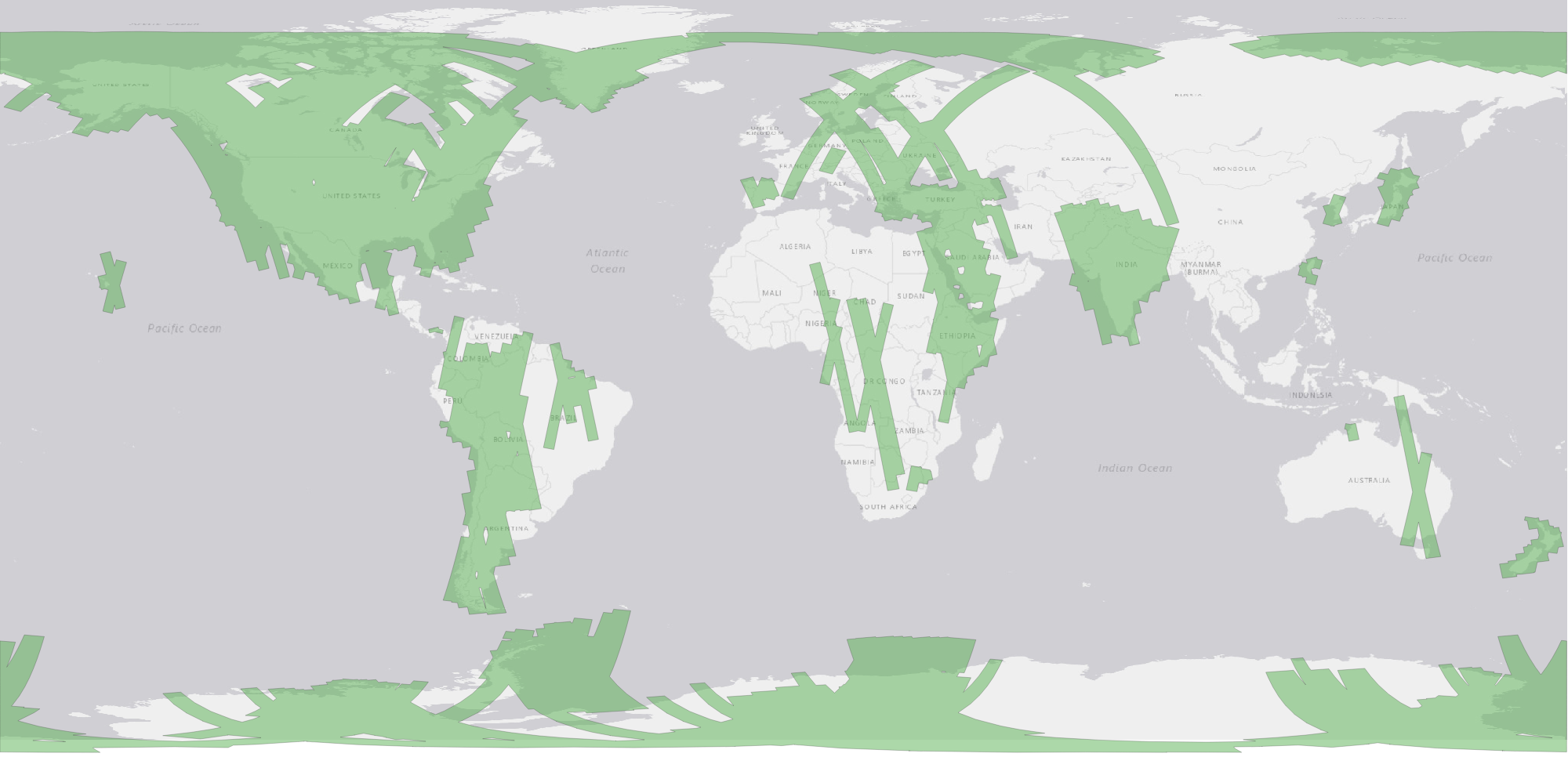
Figure 1:Spatial distribution of the archived pre-calibration NISAR data products, highlighted in green, included in the February 2026 data release.
Basemap credits: Esri, TomTom, Garmin, FAO, NOAA, USGS, (c) OpenStreetMap contributors, and the GIS User Community.
L-Band Data Release Timeline
NISAR has continually collected L-band data over nearly all global landmasses since August 2025. Figure 2 shows the spatial extent of the collected data. The NISAR Reference Observation Plan provides a more detailed, interactive map of NISAR data acquisitions.
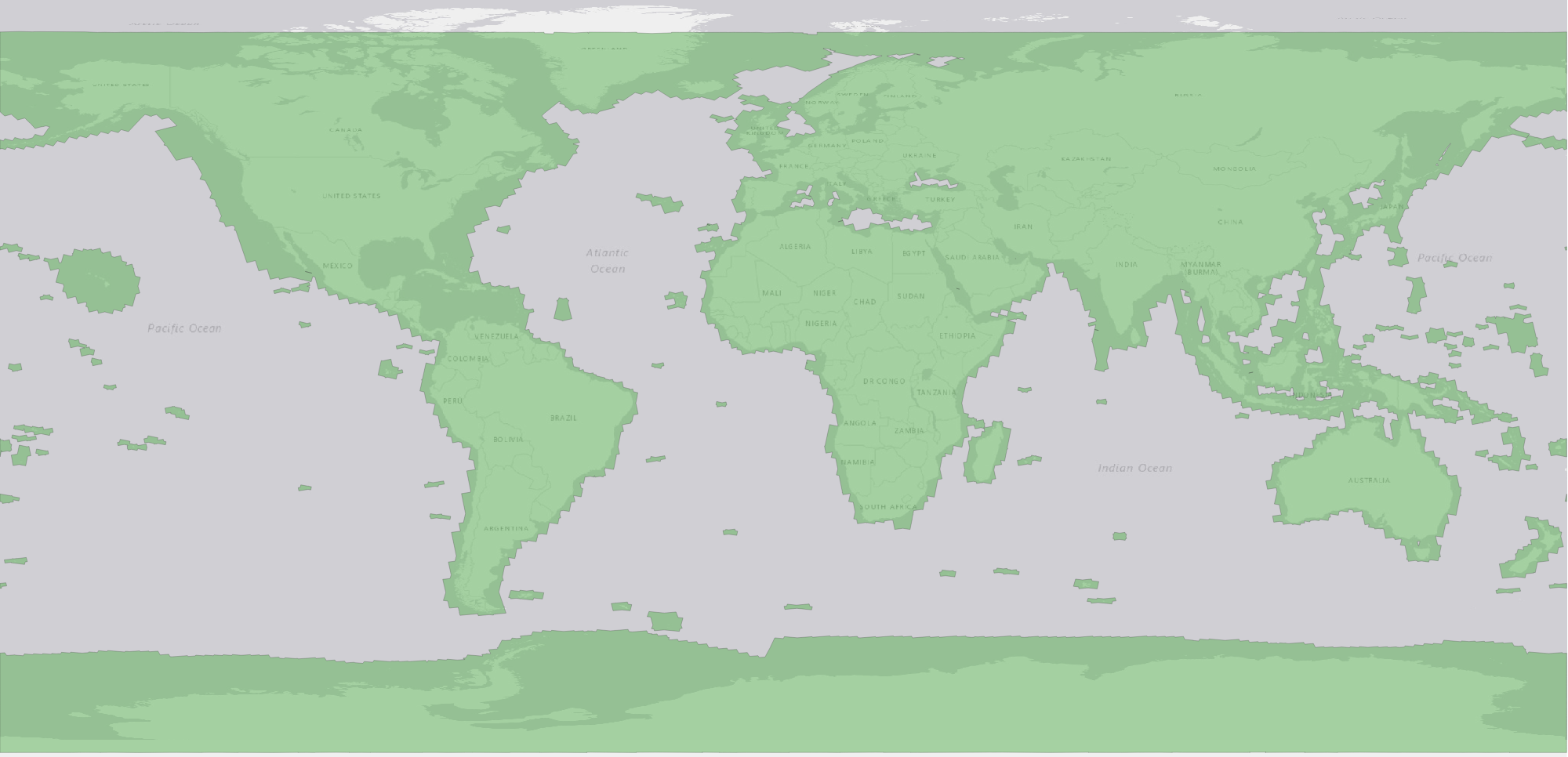
Figure 2:Spatial extent of NISAR L-band data collection, highlighted in green. Basemap credits: Esri, TomTom, Garmin, FAO, NOAA, USGS, (c) OpenStreetMap contributors, and the GIS User Community.
All L-band data products processed by the mission will be available to the public through the Alaska Satellite Facility.
The nominal data release timeline as of July 2026 is described below.
Jan 2026: Sample products
An initial release of 25 pre-calibration sample data products were made available on January 23, 2026. This release included one or more products of each of the nine Level 1-3 product types.
Feb 2026: Pre-calibration products
A larger volume of pre-calibration global data products were made available on February 27, 2026. This release included over 100,000 Level 1-3 products totaling over 500 TB of science data. These datasets are marked as BETA, as they are not yet fully calibrated.
Jul 2026: Provisional products
Global L-band NISAR Provisional products were released on July 20, 2026. These datasets are marked as PROVISIONAL, indicating that they are calibrated and partially validated, but processing improvements are still underway. Provisional datasets are available for all acquisitions starting from June 17, 2026, and forward processing will continue until fully validated products are released.
This release is the first to include L0B RRSD products, which have a nominal latency of 2-10 hours from data acquisition to availability. Level 1-3 products have a nominal latency of 36-72 hours. Products are continuously generated and made publicly available for all areas shown in Figure 2 and in the NISAR Reference Observation Plan.
Q4 2026: Validated reprocessing
Additional validation will take place using the provisional data, resulting in algorithm improvements. Once the products are fully validated, the NISAR project will transition to generating validated products with a new version of the processor and begin a reprocessing campaign. These validated products will supersede any earlier versions of the data in the archive.
This reprocessing campaign will generate new versions of Level 0-3 products from the global backlog of all L-band data collected during the science phase of the mission. Data products will be continually published to ASF and made publicly available as they are generated during the reprocessing effort, which is expected to be complete by the end of 2026.